In the long river of human development, all causes and conditions pass like a white pony glimpsed through a crack — time moves on and circumstances change.
Yet some things can traverse past and present, silently protecting a land and its people, used daily by generation after generation without being noticed.
Such are China's traditional classics of national learning (guoxue). Whether we are familiar with them or not, they are there, exerting their effect. The words in these classics are the crystallized wisdom of sages and great virtuous ones through the ages. How can we interact and resonate with these thoughts?
Only by studying them deeply and experiencing them personally can we benefit ourselves and benefit all directions.
Mencius said: “Joy enjoyed alone is not as good as joy shared with others.”
Our generations are deeply blessed: we live in a time of national peace and social harmony, and the great revival of guoxue is near at hand. From national leaders down to ordinary scholars, everyone values traditional culture.
So — what is to be revived? How is it to be revived?
This is a question of common concern to every educator.
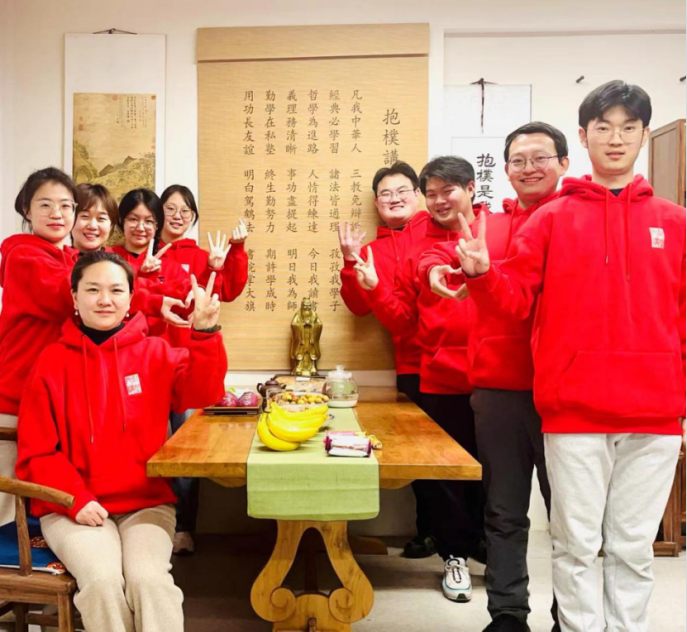
Baopu Lecture Hall, holding to its educational philosophy of “entering deeply into the classics, applying the ancient to the present,” has practiced for years in promoting fine traditional Chinese culture. With the original aspiration of “giving the best things to the young,” in 2026 we will redouble our efforts and refocus, opening a window for young students truly aspiring to research the traditional guoxue classics, and supporting the national plan for cultivating guoxue talent.
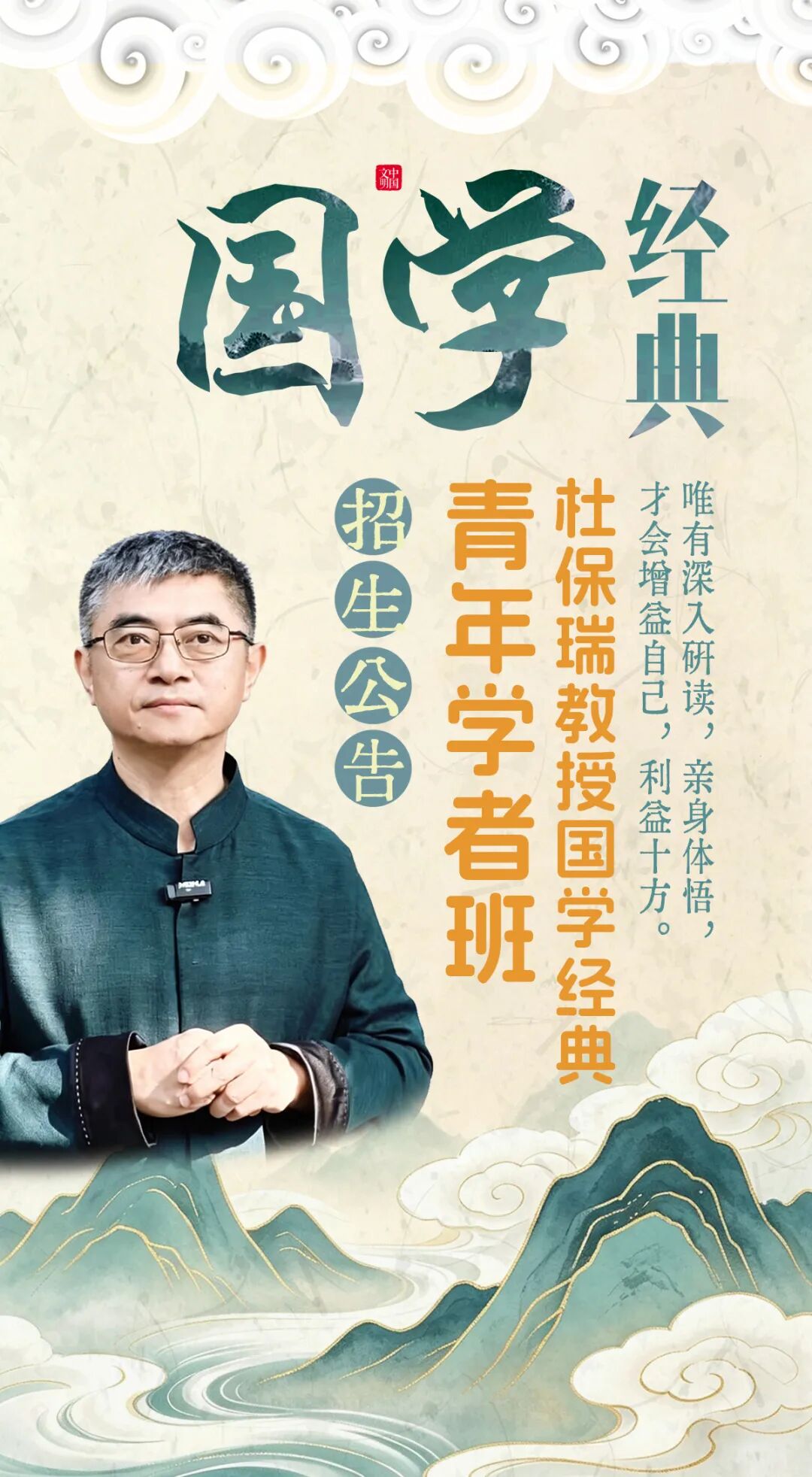
To this end, we will open Professor Duh Bau-Ruei's Youth Scholars Special Program in Chinese Classics, recruiting young enthusiasts with the aspiration to learn, for long-term cultivation.
We hope the students who enroll are true lovers of guoxue, willing with an open and pragmatic mind to absorb all fine traditional cultures centered on Chinese culture — cultivating in learning and learning in cultivation, truly “advancing learning and cultivation together.”
Vision and Goals
To cultivate professionals in Chinese philosophy, to store up talent for promoting guoxue, to let scholars gain the ability to construct theory, and to internalize it as their own character and cultivation.
Vision: Traversing past and present, leading the future
Goal: To cultivate transmitters of guoxue classics for the new era, and successors of society endowed with guoxue cultivation
Admission Notes
Curriculum: a 5-year program in three stages. The first two years focus on research methods and interpreting the Four Books, building the basic skills for reading the classics; the third year focuses on Laozi and Zhuangzi, opening the field of Daoist thought on a Confucian foundation; the last two years study the Book of Changes (Zhou Yi) and related management-type guoxue classics courses.
学习形式
Study follows a semester system, sixteen weeks per semester. Two forms of participation are available: “full-time residential study” or “online classroom.”
招生对象
Young people aged sixteen and above who aspire to study the traditional guoxue classics deeply and promote them may apply. Admission is by interview and review, after which an admission notice is issued.
课程领域
The main study materials are the Confucian classics, Daoist classics, the Zhou Yi and other management-type classics, opening up the veins of Chinese philosophy. Offline study is supplemented with Chen-style Tai Chi instruction for strengthening the body.
课程报名
Course fees:
Tuition: charged by semester, RMB 5,000 per person per semester, non-refundable once paid. Expenses beyond tuition — teaching materials, class uniforms, offline room and board, study tours — are borne by the student.
Note: For students who need the Lecture Hall to arrange room and board uniformly, management fees for room and board are RMB 3,000 per person per month, charged by semester (five months per semester); if a student withdraws midway, room-and-board management fees are not refunded.
Enrollment: the class opens with 10 students minimum and closes at 30.
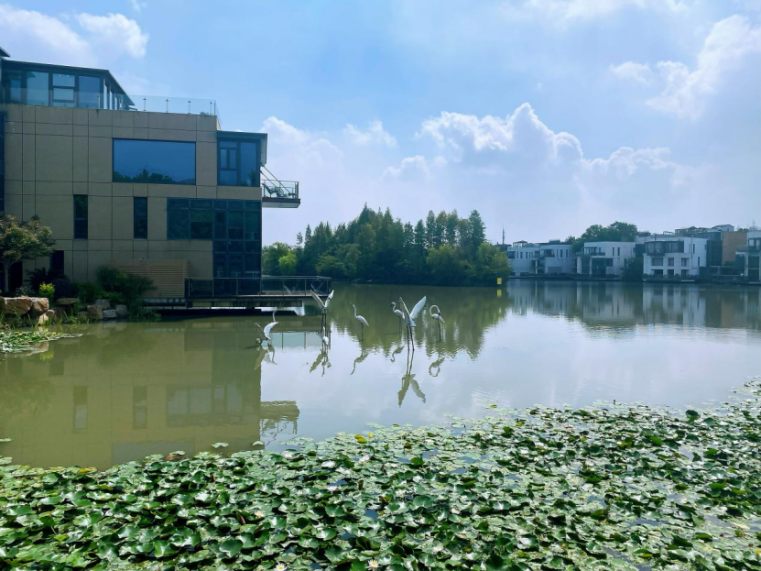
Teaching locations: Tencent Meeting rooms & No. 80, Beigan Cultural Center, Lane 222, Yehui Road, Qingpu District, Shanghai.
Curriculum
Main courses:
Main study materials are Chinese philosophy classics: the Analects, Mencius, the Great Learning, the Doctrine of the Mean, the Daodejing, Zhuangzi, the Zhou Yi, Caigentan (Vegetable Roots Discourse), the Renwuzhi (Records of Personalities), the Guanzi, selections from the Xunzi, selections from the Han Feizi, and selections from the Lüshi Chunqiu.
Supplementary courses:
How to Study Chinese Philosophy Well, poetry and rhapsodies, historical stories, study tours to must-visit cultural sites of a lifetime, talents and hobbies, visits and exchanges, and other activities.
Study Atmosphere & Requirements:
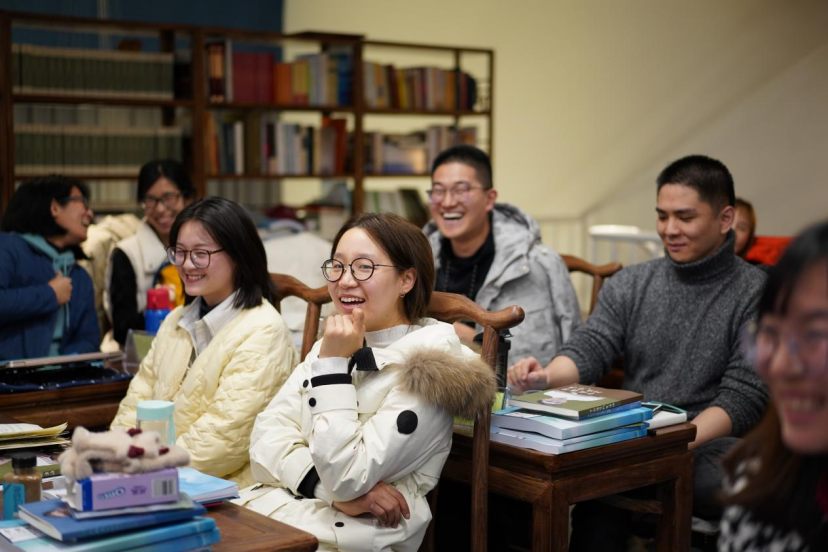
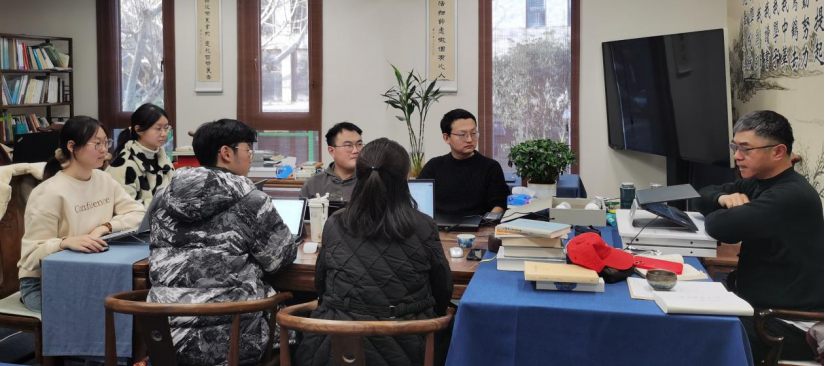
From Monday to Saturday, mornings and afternoons are class and study time. Students study independently according to individual timetables set by the teachers. Main courses all have printed materials together with video resources. Online students must keep their cameras on in the Tencent Meeting room; offline students have dedicated teachers to guide their study.
Each week, after completing the planned content, students write a study report and join the weekly study exchange and discussion meeting, exercising their abilities in learning, writing, logical thinking and verbal expression.
On schedule, students submit a study reflection or a paper summarizing what they have learned, cultivating research ability, and receiving comments and guidance from the professor and the teaching-assistant team.
Study materials use Professor Duh Bau-Ruei's Chinese philosophy monographs and guoxue classics lecture videos:
How to Study Chinese Philosophy Well
The Interpenetration and Application of Chinese Philosophy
Introduction to Philosophy
A Thematic Explication of the Analects (Baopu Lecture Hall internal lecture notes)
A Complete Explication of the Great Learning and the Doctrine of the Mean (Baopu Lecture Hall internal lecture notes)
A Complete Explication of Mencius (Baopu Lecture Hall internal lecture notes)
A Complete Explication of the Daodejing (Baopu Lecture Hall internal lecture notes)
A Complete Explication of the Seven Inner Chapters of Zhuangzi (Baopu Lecture Hall internal lecture notes)
The Zhou Yi: Authorial Form, and Vernacular Interpretation of Hexagram and Line Statements (Baopu Lecture Hall internal lecture notes)
Annotations on Caigentan (Baopu Lecture Hall internal lecture notes)
Annotations on the Renwuzhi (Baopu Lecture Hall internal lecture notes)
The Philosophy of the Guanzi (Baopu Lecture Hall internal lecture notes)
The Philosophy of the Xunzi (Baopu Lecture Hall internal lecture notes)
The Philosophy of the Han Feizi (Baopu Lecture Hall internal lecture notes)
The Philosophy of the Lüshi Chunqiu (Baopu Lecture Hall internal lecture notes)
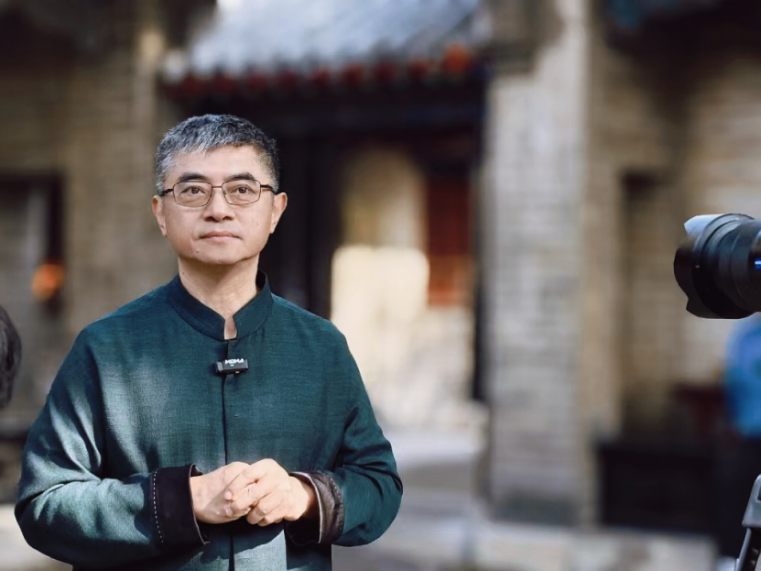
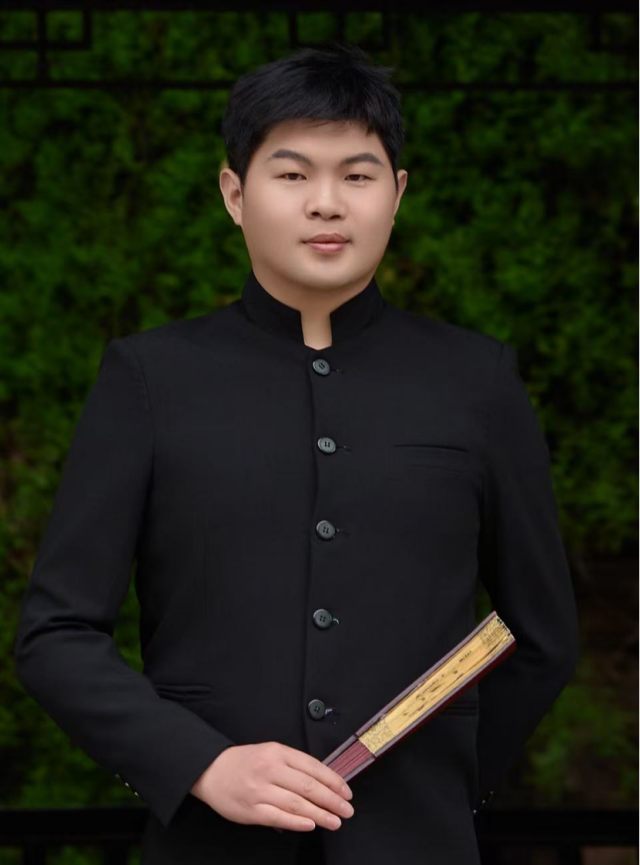
Mentor Introduction: Duh Bau-Ruei, male, born in 1961 in Ruifang Township, New Taipei City, Taiwan; ancestral home: Tuwang Village, Dashu Township, Zoucheng City, Jining, Shandong. He grew up and was educated in Taipei, Taiwan, and received his PhD in philosophy from National Taiwan University (1993), under Professor Chang Yung-Chün, a disciple of Fang Dongmei. He served as Associate Professor in the Department of Philosophy at Huafan University (1995–2005) and as Professor in the Department of Philosophy at National Taiwan University (2005–2017).
Current positions:
Distinguished Professor at Shanghai Jiao Tong University (2017– ), and Director of the Center for Guoxue Education Research, School of Humanities
Principal Lecturer of Shanghai Baopu Lecture Hall
Editor of the Cross-Strait Guoxue column of the Journal of Jilin Normal University
Experience:
President, China Youth Solidarity Association, Taiwan,
Adjunct Lecturer, Department of Chinese Literature, Tamkang University, Taiwan,
Lecturer, Fo Guang Shan Buddhist Research Institute, Taiwan,
Lecturer, Tzu-Ming Buddhist Research Institute, Taiwan,
Associate Professor, Department of Philosophy, Huafan University, Taiwan,
Head of the Extracurricular Activities Section, Huafan University, Taiwan,
Chair, Department of Philosophy, Huafan University, Taiwan,
Dean, College of Liberal Arts, Huafan University, Taiwan,
Secretary-General, Chinese Philosophical Association, Taiwan,
President, Yijing (Book of Changes) Society, Taiwan,
Director, Extracurricular Activities Division, Office of Student Affairs, National Taiwan University,
Director, Center for Buddhist Studies, College of Liberal Arts, National Taiwan University,
Deputy Dean of Student Affairs, National Taiwan University,
Dean of Student Affairs, National Taiwan University,
Lecturer, Fo Guang Shan Tsung Lin University, Taiwan,
Haitian Scholar, Dalian University of Technology,
In academic research, he has always specialized in Chinese philosophy. Since his graduate-student days he has emphasized research methods for Chinese philosophy, establishing the four great questions of the Chinese philosophical view of truth as a methodological approach for researching, discussing, understanding and interpreting Chinese philosophy — opening frontier horizons for Chinese philosophy research and enabling continued innovation in Chinese philosophical theory. First, on systematicity, he proposed the four basic philosophical problems — cosmology, ontology, the theory of cultivation, and the theory of the attained state — as an interpretive framework for reading texts. Second, on verifiability, he pointed out that one should discuss the relation between persons and theory in practice and verification through four roles — founder, researcher, practitioner, and verifier — pursuing the special reality of a verification theory for the philosophy of life; this is the part contributing most to contemporary Chinese-Western philosophical exchange. Third, on applicability, following the Six Lines of the Zhou Yi from below upward, he positioned Mohism, Confucianism, Zhuangzi, Laozi, Legalism and Buddhism as thought-standpoints under corresponding levels of vision, dissolving the necessity of conflict and opposition among schools and gaining a vision that interpenetrates all schools. Finally, on selectivity, he advocates: worldly teachings should be studied comprehensively, while for transcendent teachings one may choose one and go deep — thus becoming a worldly sage who responds to change without obstruction. This is a new system of Chinese philosophy that runs through Confucianism, Buddhism and Daoism, with theoretical creativity.
In life practice, he has held numerous administrative leadership positions and has rich administrative experience, giving his understanding of the classics a background of practical experience. From youth he resolved to walk the road of promoting Chinese culture. After coming to Shanghai Jiao Tong University, he has spared no effort in promoting guoxue classics education, actively conducting guoxue education courses and spreading fine traditional Chinese culture. His lectures go deep yet come out shallow — clear and easy to understand, readily absorbed and used by all sectors of society. He holds that the basic character education of Chinese philosophy lies in Confucianism; the skills of handling oneself and dealing with the world lie in Daoism; governing large systems lies in Legalism; handling the question of life and death lies in Buddhism; and in the end the foundation of everything returns to Confucianism. If a person masters the Four Books, the Zhou Yi, the Laozi, the Han Feizi, the Renwuzhi and Caigentan, they can be an all-round talent in dealing with the world.
Features of Professor Duh Bau-Ruei's academic theory:
(1) A creative contemporary scholar
(2) A scholar with philosophical speculative power
(3) A scholar who proposes interpretive frameworks for reading schools' theories
(4) A scholar who resolves the conflict among the three teachings
(5) A scholar who interpenetrates all schools
(6) A scholar diligent in lecturing on the classics of every school and establishing theoretical works on interpreting the classics
Teaching at Shanghai Jiao Tong University:
Introduction to Chinese Philosophy, Frontier Issues in Chinese Philosophy, Philosophy of the Zhou Yi, the Pre-Qin Masters.
Teaching at Shanghai Baopu Lecture Hall:
Guoxue Classics Private School Class, Guoxue Classics Lecturer Class, Introduction to Chinese Philosophy Class, Introduction to Confucianism Class, Primary and Secondary School Teachers' Guoxue Classics Seminar, Chinese Philosophy History Research Camp, Chinese Management Philosophy Class.
Monographs:
1. Liu Jishan's Theory of Cultivation and Metaphysical Thought (National Taiwan University philosophy master's thesis, 1989) (Taiwan Huamulan)
2. On Wang Chuanshan's Metaphysical Approach Giving Equal Weight to Yi Learning and Qi Theory (National Taiwan University philosophy doctoral dissertation, 1993) (Taiwan Huamulan)
3. Zhuang Zhou Dreams of a Butterfly (Taipei Shuquan Press, 1995) (Beijing Huawen Press, 1997) (Wunan Books, 2007)
4. The Reversal Is the Movement of the Dao (Taipei Hongtai Press, 1995) (Beijing Huawen Press, 1997)
5. The Theory of Cultivation and the Philosophy of the Attained State (Beijing Huawen Press, 1999)
7. Northern Song Confucianism (Taiwan Commercial Press, 2005)
8. Introduction to Philosophy, co-authored by Duh Bau-Ruei and Chen Ronghua (Taipei Wunan Books, 2008)
9. Southern Song Confucianism (Taiwan Commercial Press, 2010)
10. Methodology of Chinese Philosophy (Taiwan Commercial Press, 2013)
11. A Critical Assessment of Mou Zongsan's Confucianism (Beijing Xinxing Press, 2017; Taiwan Commercial Press, 2017)
12. Speaking of the Zhou Yi (Shandong Qilu Press, 2018)
13. Research on the View of Truth in Chinese Life Philosophy (People's Press, 2019)
14. The Interpenetration and Application of Chinese Philosophy (Qilu Press, 2020)
15. Yangming Philosophy and Selected Writings of Yangming (Zhejiang University Press, 2020)
16. Non-Contention: The Wisdom of Laozi (Guangxi University Press, 2021)
17. Down-to-Earth, Seeking Truth from Facts (People's Press, 2022)
18. Prajna Wisdom and the Bodhi Mind: A Study of Master Hsing Yun's Cultivation Method (Fo Guang Shan Culture Press, 2023)
19. An Explication of Wang Yangming's Instructions for Practical Living (Taiwan Huaxia Press, 2024) (People's Press, 2023)
20. A Critical Assessment of Mou Zongsan on Daoism and Buddhism (Taiwan Huaxia Press, 2024) (Jiuzhou Press, 2023)
21. Frontier Issues in Chinese Philosophy (Shanghai Jiao Tong University Press, 2024)
22. The Worldly Wisdom of Intellectuals: Eight Lectures on Caigentan (Dayou Bookstore, 2025)
23. A Critical Assessment of Tang Junyi's Chinese Philosophy (Taiwan Huaxia Press, 2025)
24. A Critical Assessment of Fang Dongmei's Chinese Philosophy (Taiwan Huaxia Press, 2025)
25. A Critical Assessment of New Confucian Zhu Xi Studies (Taiwan Huaxia Press, 2026)
Teaching Assistant Team
Wang Jinyuan, courtesy name Fuzhong
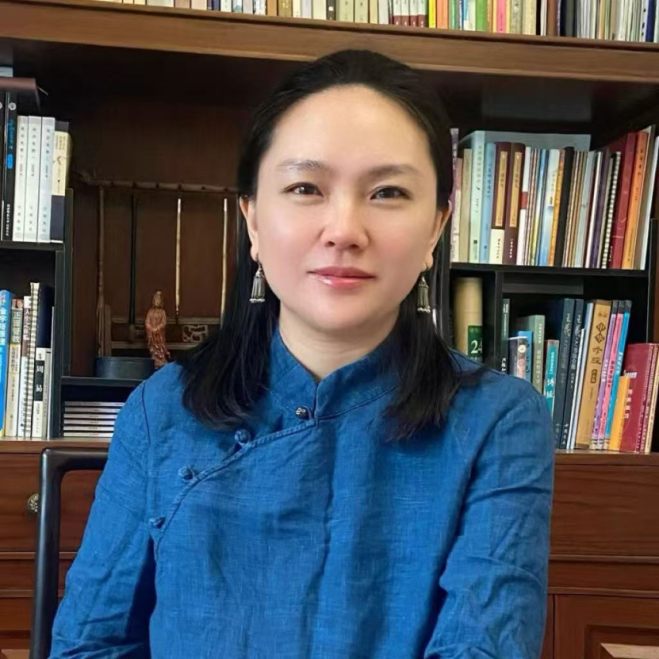
A bachelor's graduate of Shandong Jianzhu University, he came into contact with classics education in 2016 and memorized 100,000 characters of classics. In 2019 he joined the 2nd cohort of Professor Duh Bau-Ruei's private-school master-doctoral class; in 2020 he joined Baopu Lecture Hall and serves as a teaching assistant of the Baopu Lecturer Class. He has now studied with Professor Duh Bau-Ruei for seven years and received a private-school doctorate in Chinese philosophy from Professor Duh Bau-Ruei.
Xu Yeyuan, courtesy name Yanran
Head of Shanghai Baopu Lecture Hall
President and column chief editor of Baopu Journal
Teaching assistant for Professor Duh Bau-Ruei's Introduction to Philosophy Class and Introduction to Confucianism Class
Teaching assistant for Professor Duh Bau-Ruei's 3rd and 4th Guoxue Classics Lecturer Classes
Devoted to the research and dissemination of fine traditional Chinese culture for more than ten years; for nearly eight years he has studied Chinese philosophy classics with Professor Duh Bau-Ruei, receiving a private-school doctorate in Chinese philosophy from Professor Duh Bau-Ruei in 2024 and a Guoxue Classics Lecturer certificate from Professor Duh Bau-Ruei in 2025.
Introduction to Baopu Lecture Hall
Seeing the Plain, Embracing Simplicity; Cultivating Oneself to Benefit Others
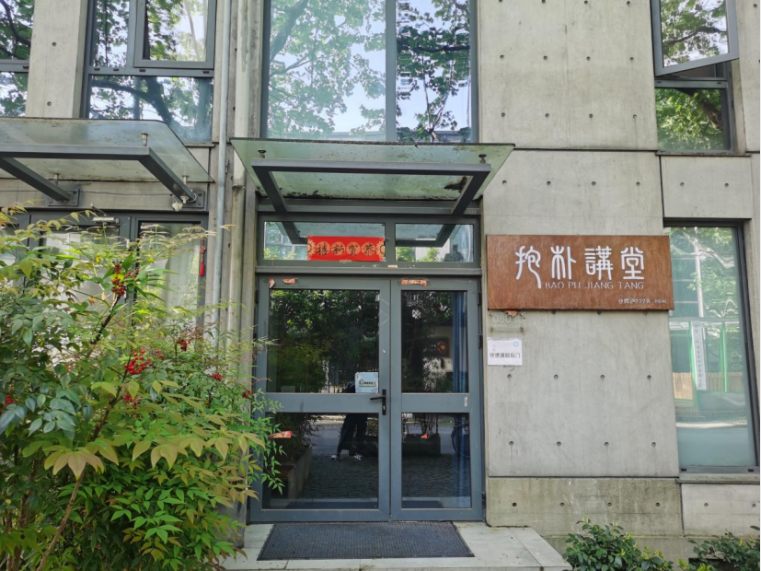
Baopu Lecture Hall was founded in 2018 and is managed by Shanghai Baoputang Cultural Development Co., Ltd. The Lecture Hall is located at No. 80, Beigan Cultural Center, Lane 222, Yehui Road, Zhaoxiang Township, Qingpu District, Shanghai, with a total area of nearly 500 square meters.
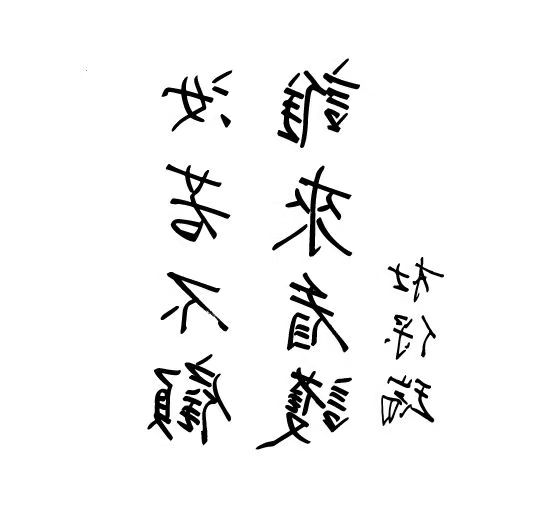
The name of Baopu Lecture Hall comes from the Daoist classic Daodejing. Its value philosophy is “seeing the plain, embracing simplicity; cultivating oneself to benefit others.” We hope that colleagues of the Lecture Hall and all Baopu students, amid a clamorous and restless social environment and an increasingly globalized background, will hold to their own values — at no moment arrogant or impatient — and down-to-earth do things beneficial to their own growth and to society's development. In Professor Duh Bau-Ruei's words: to work “keeping a simple good intention, continuously and without interruption,” tempering oneself with “diligence and plainness.”
One of Baopu Lecture Hall's social responsibilities is to disseminate and cultivate guoxue classics lecturers. Baopu students are personally taught and guided by Professor Duh Bau-Ruei — a philosophy professor from National Taiwan University, now a Distinguished Professor in the Department of Philosophy at Shanghai Jiao Tong University. The Lecture Hall's curriculum system gradually took shape through Professor Duh Bau-Ruei's nearly eight years of tireless teaching practice. Professor Duh Bau-Ruei's educational philosophy can be seen in the Lecture Hall's “Ode to Diligent Study”:
All we Chinese must learn the classics;
Philosophy is the approach, the meanings and principles must be clear;
The three teachings need no debate, all dharmas share the same principles;
Human feelings thoroughly practiced, undertakings all taken up;
Lifelong diligent effort, departing bright and clear on the crane;
Majestic our China, earnest our students;
Today I read books, tomorrow I will be a teacher;
May, when learning is complete, we hold the academy's great banner.
Professor Duh Bau-Ruei hopes all Chinese students will surely learn the classics left by the former sages. How can learning be quicker and more effective? Professor Duh gives us a philosophical vision and clear meanings and principles, deeply analyzing the theories of every school, letting us see clearly that Confucianism, Buddhism and Daoism do not need to debate one another — because each teaching has its own core social problem to solve; each theory is useful, each a self-contained system of learning.
Professor Duh not only teaches us learning; he also teaches us a magnanimous attitude toward life: to see through the ways of the world yet not withdraw from it — for “hard work cures a hundred diseases.” As members of society, let us come clearly and, waving a bright hand, quietly depart — keeping the Lecture Hall's value philosophy: “seeing the plain, embracing simplicity; cultivating oneself to benefit others.”
At the same time, Professor Duh holds full expectations for all Baopu students, hoping we play a leading role in the tide of social development, become teachers of classics education, go to all parts of the country, even all over the world, to run academies, take part in spreading the classics, take part in serving society, and help the nation grow strong and the people flourish.
So, we are reading — but we are not merely reading. We read for ourselves, but not only for ourselves: we read for our families, for this nation, and for this era! In his youth, Premier Zhou Enlai resolved “to read for the rise of China.” We have caught a good era: under the efforts of the older generation, the Chinese nation has already risen; now, all the more, we must “read for the harmonious coexistence of the world.” With the classics as our foundation and modern technology as our weapon, together let us welcome the arrival of the interstellar age.